Suze van de Pas
Marketing and Sales Intern


Four days. Thousands of people. One signal that kept coming up in every session, every hallway conversation, every live demo: the Atlassian platform is no longer what it was six months ago, and most organizations haven't caught up to what that actually means for them.
Not every events changes how you think. This one did. Not because of the product announcements, though there were very interesting, but because the underlying philosophy behind all of it finally became visible.
We’ve started believing something much more strongly after this week: most enterprise AI initiatives aren't failing because the AI is bad. They’re failing because the systems connected to that AI have no idea how your team actually works. Think about what AI is genuinely capable of today; summarizing, writing code, and answering questions at speed. But it usually has no understanding of who owns what, why a priority shifted three months ago, or how a single decision in a Confluence page is currently blocking a team in Jira.
That context doesn’t live in a prompt. It lives in the operational history of a company, and for most organizations, that history is spread across tools, people, and institutional memory that no AI assistant can currently access in any meaningful way. SVP at Atlassian, Sanchan S Saxena, put it perfectly:
"I know all of you are thinking about AI right now you're experimenting with some ideas in your organizations new models new tools and probably new budget as well to spend and try those out and most of it is not working not because AI is bad but because the system that connects to that AI doesn't know about your team"
The enterprise AI conversation has been focused on models for two years, but that conversation is already becoming the wrong one. Foundation models are standardizing faster than most organizations can run their internal evaluations. The real differentiator is shifting toward organizational context. The operational knowledge that makes AI useful inside your specific company.
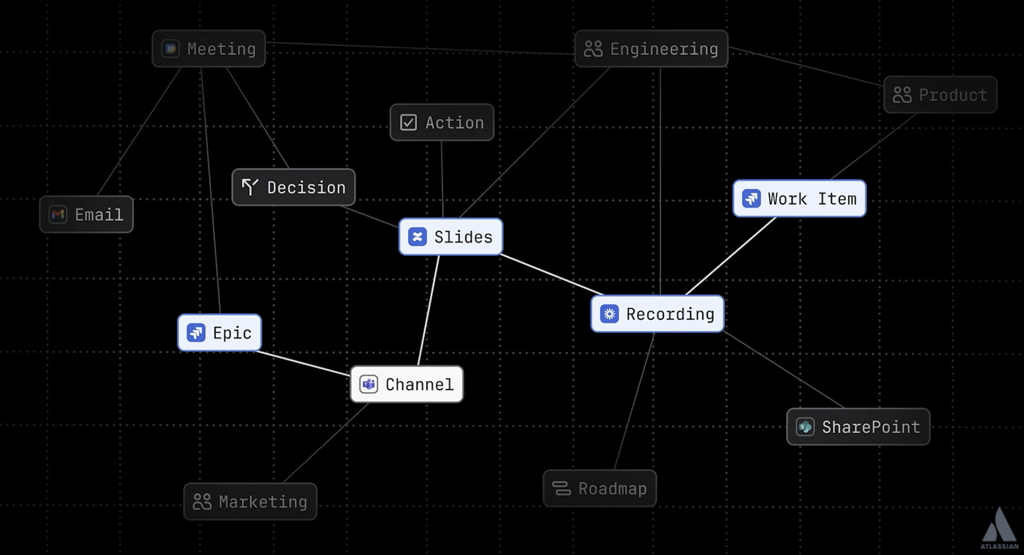
Atlassian is placing a massive bet on this through the Teamwork Graph, which now contains more than 150 billion objects and relationships across Jira, Confluence, and third-party systems. What Atlassian calls "context" is actually your company’s operational DNA; the handoffs, the reasoning, and the dependencies that show why work evolved the way it did.
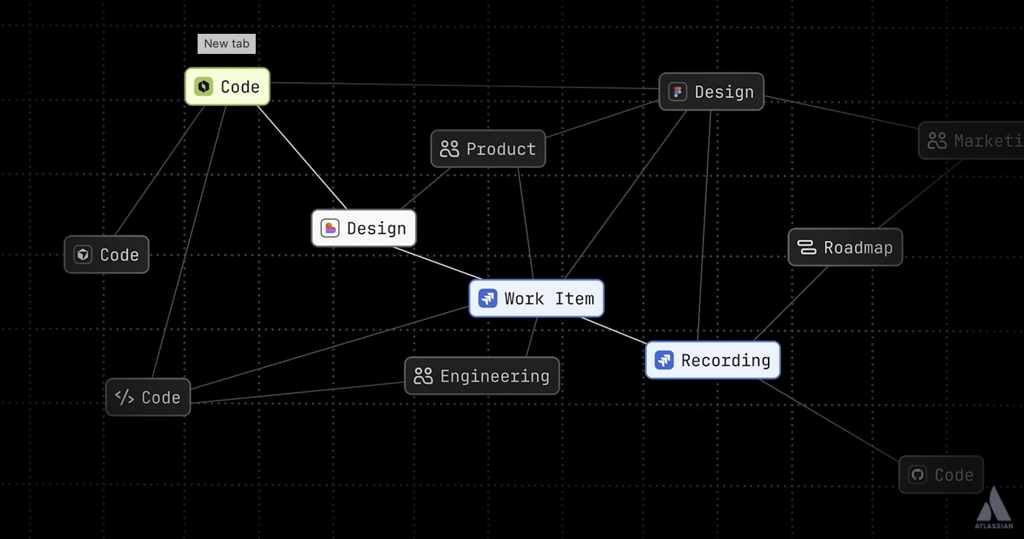
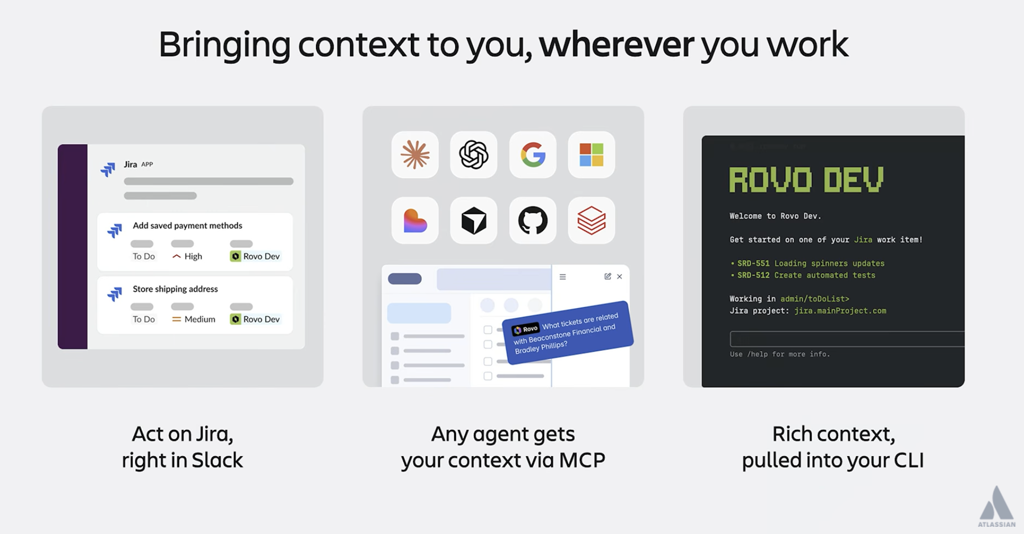
Context isn’t just a static database; it is becoming programmable. Through new MCP tooling and a new CLI, Atlassian is opening up that "company brain" so your context can flow natively into tools like Claude Code or Cursor. For developers, this is a massive pivot. The Teamwork Graph CLI lets engineers pull that Jira context directly into their local terminal. The work happening in a ticket is no longer siloed from the work happening in the code. When you can point your tools at your team’s actual history and say "fix this bug based on our specific architectural standards," the distance between requirement and execution starts to vanish.
The question organizations should be asking is no longer: which model should we use?
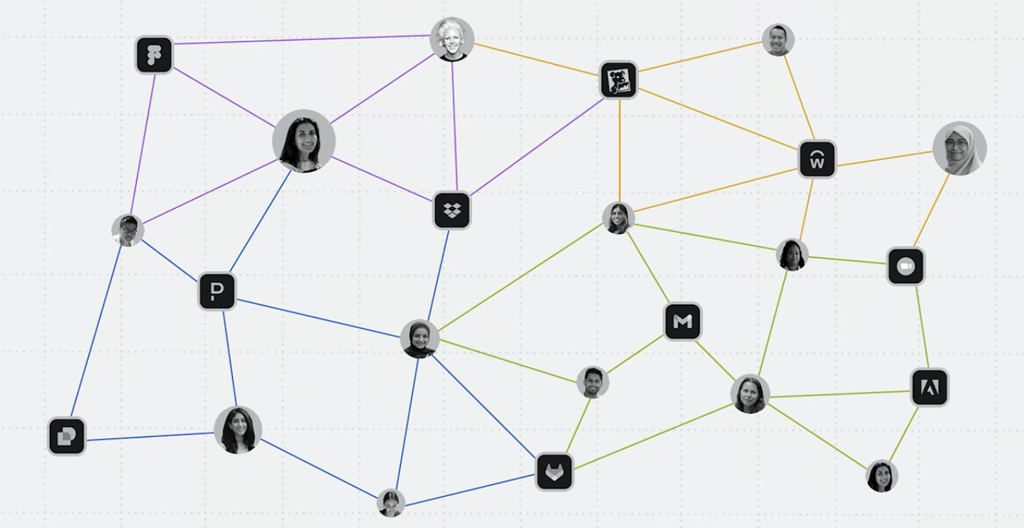
It's: how connected is our operational knowledge, and who has access to it?
One of the most important announcements was also one of the easiest to underestimate: Agents in Jira are now generally available. This isn't just a workflow tweak; it changes how teams own work. Tasks can now be assigned to agents exactly like they are assigned to people, appearing on boards and creating visibility within existing workflows.
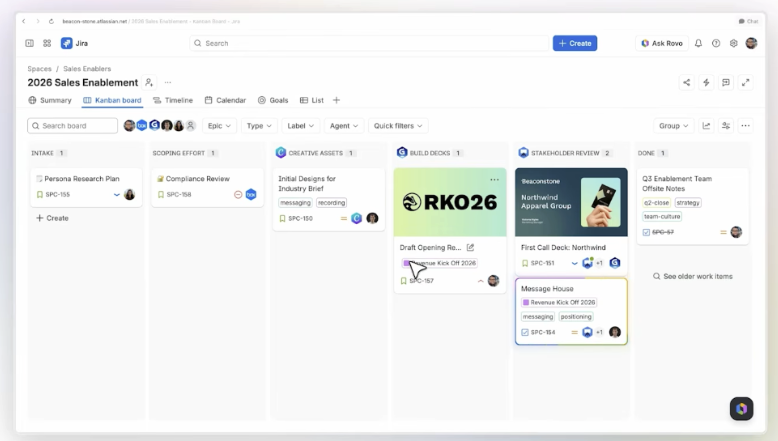
Jira has evolved into the home for all your AI. Moving an issue into a Design phase can now trigger a design agent to begin drafting assets based on the ticket history. Moving that same issue into Development can trigger Rovo Dev to start implementation work automatically. It doesn't stop at Atlassian's own agents; Jira now acts as the orchestration layer for third-party agents from tools like Figma, HubSpot, GitHub Copilot, and Claude.
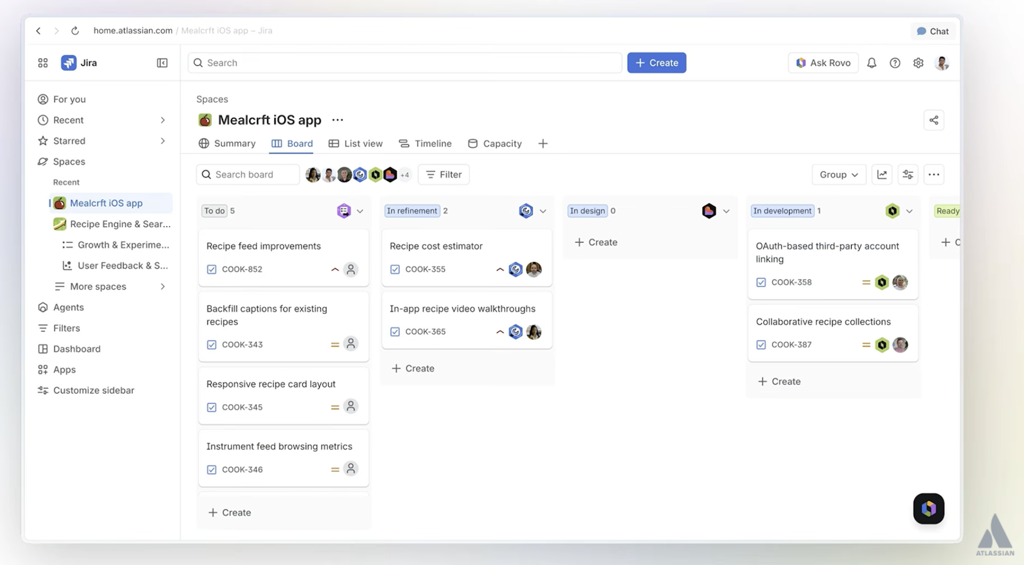
Alongside this, the Jira AI Planner was one of the more impressive breakthroughs. It automatically generates technical plans directly from a ticket, breaking down work and identifying dependencies. It gives teams a structured starting point without anyone having to reconstruct context from scratch. Combined with agents that can act on those plans, the gap between "ticket created" and "work started" is shrinking. This activity becomes visible within Jira itself, which matters for governance and traceability. You don't lose the "why" behind the work.
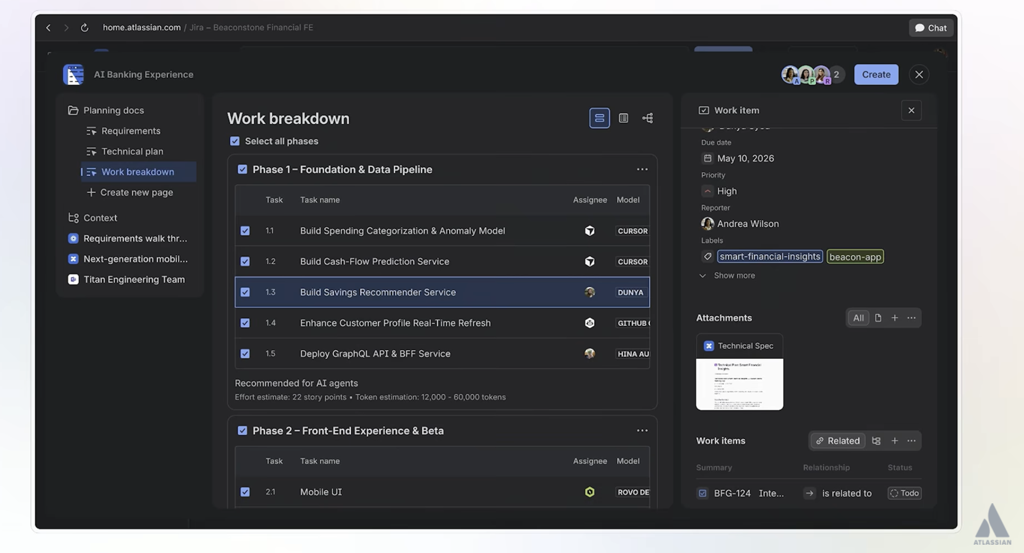
The important shift isn't automation itself. It's that these interactions now happen inside the operational systems teams already use every day. Unlike isolated AI tools, where prompts disappear into private chat histories, this activity becomes visible within Jira itself. Rovo Studio becoming generally available supports this direction further. It significantly lowers the barrier to configuring and deploying agents within Atlassian environments without building everything from scratch. The practical implication for organizations is no longer whether to use agents. It’s where they create the most operational advantage first.
One session in particular, The Agentic Edge, framed this well: start where work consistently stalls between teams, where decisions follow repeatable patterns, and where delays create measurable business impact. Not everywhere at once. One workflow, one proof of value, then expand intentionally.
We don't talk enough about the "translation tax", that invisible cost we pay every time we manually translate context that already exists. Writing project summaries, documenting verbal requirements, or recreating information for a team that wasn't in the room carries an enormous cost.
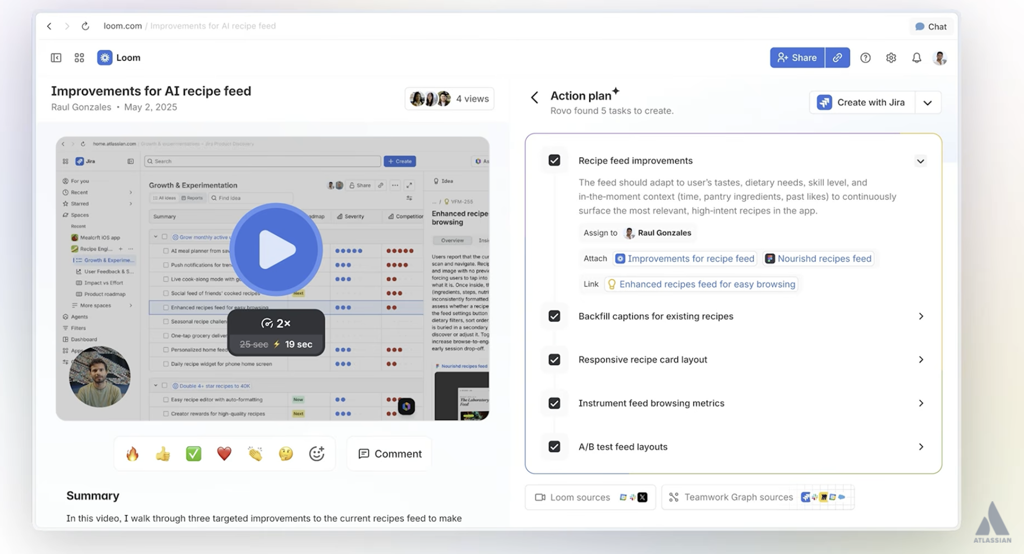
Loom Agent Briefings are a direct attack on this. Instead of typing prompts, users can brief agents naturally while sharing screens. The system captures voice, clicks, gestures, and linked assets to generate structured Jira work items automatically. When you return from vacation, you don't need a search bar; you need a partner that can reason. Rovo now crawls the graph to surface what actually matters, flagging risks and ripple effects of decisions made while you were away.
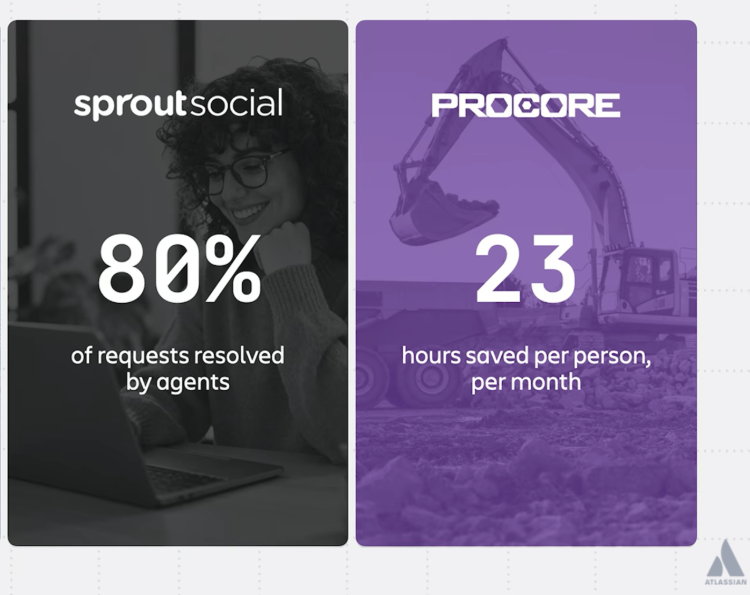
And because work usually culminates in a presentation, Confluence Slides now turns a prompt or a page into a fully editable, on-brand slide deck in seconds. The impact is already measurable. At Procore, every single person in the organization is saving an average of 23 hours every month*. Even in IT, Sprouto reported that an agent now autonomously resolves 80% of new-hire questions.**
Team '26 also showed something important for Marketplace partners that isn't getting enough attention across several ecosystem and partner sessions: how customers find solutions is changing at a fundamental level.
How customers find solutions is shifting from SEO and rankings to AI-generated recommendations. When an AI assistant is asked for a partner specializing in a specific field, the answer depends on how clearly your expertise shows up across the "ecosystem signals" recognized by AI systems. Generic positioning is becoming harder to maintain; clear, specialized expertise is becoming the new baseline for visibility.
Atlassian is placing more value on partners who deeply understand specific operational challenges—like healthcare compliance or financial governance—rather than those building broad, generic apps. Solutions built around real operational complexity are harder to replace because the knowledge is embedded in the product itself. As agents become more embedded, customers will need systems that understand how work moves across specific teams and approvals.
A keynote during the week made something explicit that had been becoming increasingly visible across the ecosystem for a while: Atlassian is putting more value on partners who deeply understand specific operational challenges. Not partners building broad apps that try to do a bit of everything. The message wasn't simply "build apps." It was: build solutions that actually fit the way organizations work.
A generic workflow app can be copied or replaced quickly. Solutions built around real operational complexity, like healthcare compliance, enterprise IT governance, or financial approval processe, are much harder to replace because they require genuine understanding of how those environments actually function. That's not a feature advantage; that's knowledge embedded into the product itself.
What made Anaheim interesting is that these shifts extend far beyond Atlassian. The broader industry is struggling with the same question: how do you make AI genuinely useful inside the messy reality of day-to-day work?
The biggest takeaway wasn't a specific feature; it was that Atlassian is focused on solving the context problem. Most organizational problems don't happen because people lack tools; they happen because information is scattered and teams operate without shared context. By closing the "context gap," Atlassian is turning a company’s operational history into a programmable advantage. The real story over the next year won't be about which foundation model you use—it will be about how quickly you can bridge the gap between an interesting conference and genuine organizational change.
*Atlassian. (n.d.). How Sprout Social empowers employees with Atlassian. Atlassian Customer Stories. Sprout Social saves $180,000 annually with Teamwork Collection
**Atlassian. (n.d.). How Procore scales teamwork with Atlassian. Atlassian Customer Stories. Procore unifies teamwork and roadmaps in one System of Work


Avisi Apps B.V.
Nieuwe Stationsstraat 10
6811 KS Arnhem
KvK: 76632490
BTW: NL860713659B01


.svg)
.svg)


We use cookies on our website to enhance your browsing experience. Some of them are essential, others are optional. Because we respect your right to privacy, you can choose not to allow personalized cookies. Learn more
Functional cookies