Jaimy Heijstee
Product Marketing Manager


My (as I came to find out) famous last words I tell myself every weekday. It’s right up there with cleaning my desktop ‘today’.
’Later’ never comes, or comes on a Friday afternoon, or maybe Monday morning when I look on my timesheet, having to fill in the blanks between whatever I have in my calendar.
Memory is not a reliable timekeeper (enter Tracket). By the end of a workday, the morning is already close to 8 hours ago. Now think about the Friday when you (have to) log time at the end of the week. Research (from 1855, but still relevant today) on recall suggests we lose a significant chunk of new information within the first hour(s) of experiencing something, yet some of us track time after each day, or days, after the work has been done.
While we do try to make tracking time easier, with for example the calendar integration in Tracket, deep work, or focus work, gets rounded down. If I'm helping my colleague fix a support ticket, which might not be my task for today, it’s still something I spend time on.
Tracking time can be a great means to an end, and often reconstructed time will work to some extend rather than recorded time, but some things might still break. Project estimates get worse for example, because they’re built on a clean version of how you recall the past, making a conversation about capacity and resource management become somewhat of a guess (see where we’re going). A lot of work never shows up which makes it easy to undervalue. So where am I going with this..?
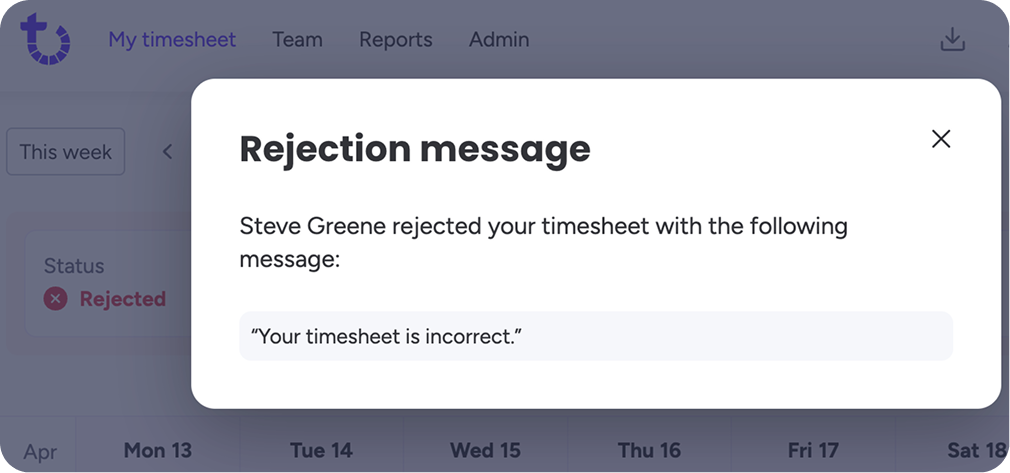
Recently I found myself in a situation where my manager started to plan for a highly requested feature in Tracket, and when looking at my timesheets, had a hard time understanding what I spend on which project (in my case, a go-to-market of any of our recent feature releases). Time for something to change.
There's no need for a new system or a company-wide policy. You just need to shrink the gap between when work happens and when it gets logged. Logging right after a task is accurate.
Logging the week on Friday is a reconstruction. Both have trade-offs, and neither is perfect for every team.
Not everyone works in a structured enough role to have a task for everything, and a lot of our work surfaces in Slack, daily standups or in helping a colleague for half an hour (with no item in monday attached).
How work works for us in Tracket, we complemented task-based tracking with broader categories that reflect how work actually happens for us day to day, which means that even if we don't plan or work into the fine sub-tasks, we still have a place to mark how we go along our days. And yes, this is how we made it work in our team and might not work for everyone.
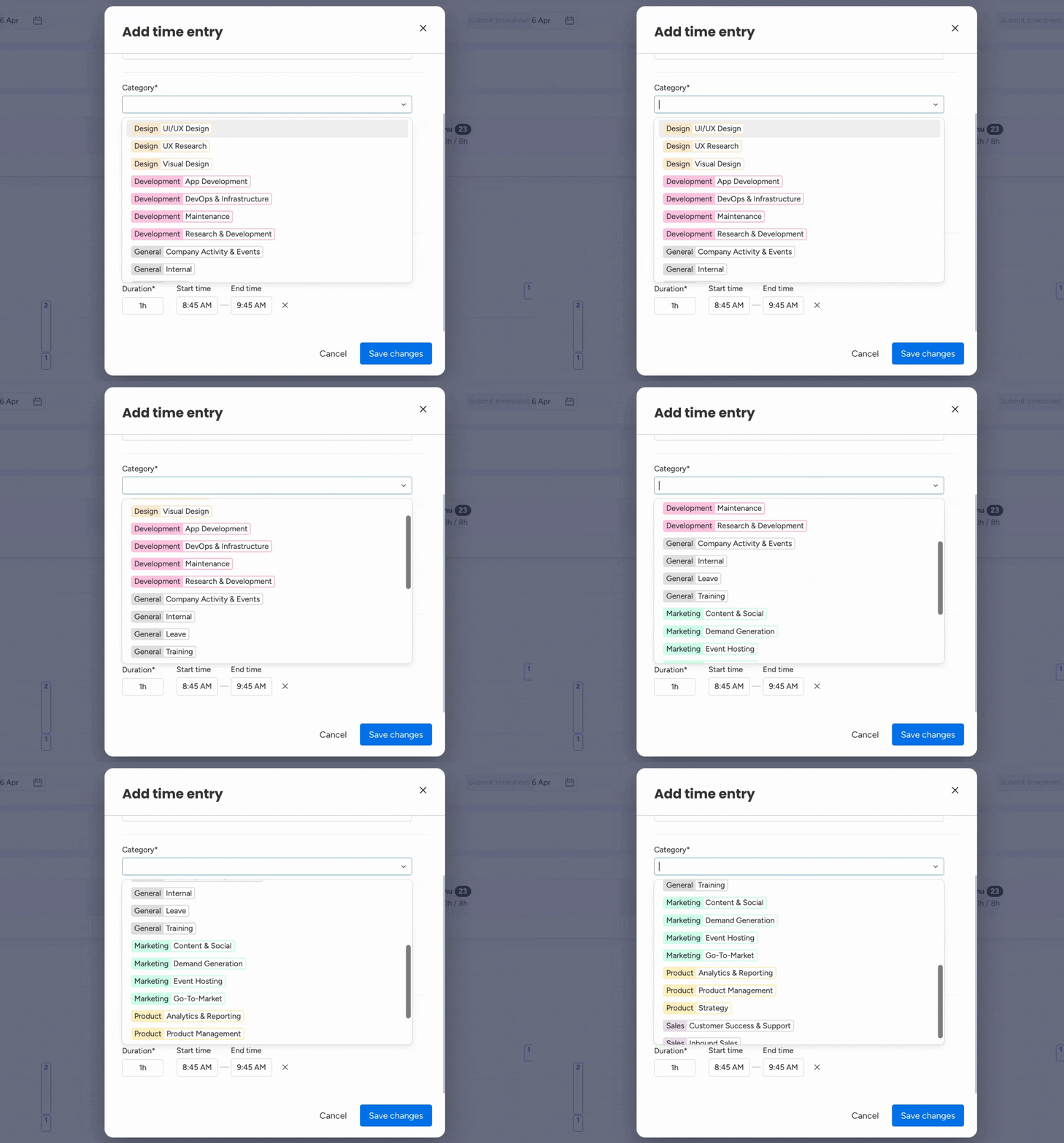
Try to understand how you (or your colleagues) work, and how they go on about their day, and try to divide, group, or task it. Ultimately to find out how best to set up your monday.com or Tracket ecosystem to accomodate how you work.


Avisi Apps B.V.
Nieuwe Stationsstraat 10
6811 KS Arnhem
KvK: 76632490
BTW: NL860713659B01


.svg)
.svg)


We use cookies on our website to enhance your browsing experience. Some of them are essential, others are optional. Because we respect your right to privacy, you can choose not to allow personalized cookies. Learn more
Functional cookies